Overview: Probate Attorneys
Probate is the court process that moves what someone owned into the names of the people who inherit it. If you are the executor, you file the will, prove it, notify creditors, collect and value the assets, settle debts and taxes, then hand over what is left. Most of it is paperwork rather than argument, but the paperwork is unforgiving and it lands on you while you are grieving.
Firms take this on in different shapes. Some run the whole administration for you. Some coach you through a simple estate and step in only for the court filings and the awkward creditor. Ask which model you are buying, who does the day-to-day work, and how the charge is set, because administration is billed hourly by some firms, as a flat fee by others, and as a share of the estate in certain states.
Bring the death certificate, the original will, a list of accounts and property, the deeds, and recent statements. Anything with a named beneficiary or a joint owner often passes outside probate, so bring those papers too. They decide how much of this process you actually need.
Listings show what each firm publishes about estate administration and the kinds of estates it handles. The state and city lists lead to firms near you, and each city page marks which are in that city and which are close by.
Cost of probate and estate administration
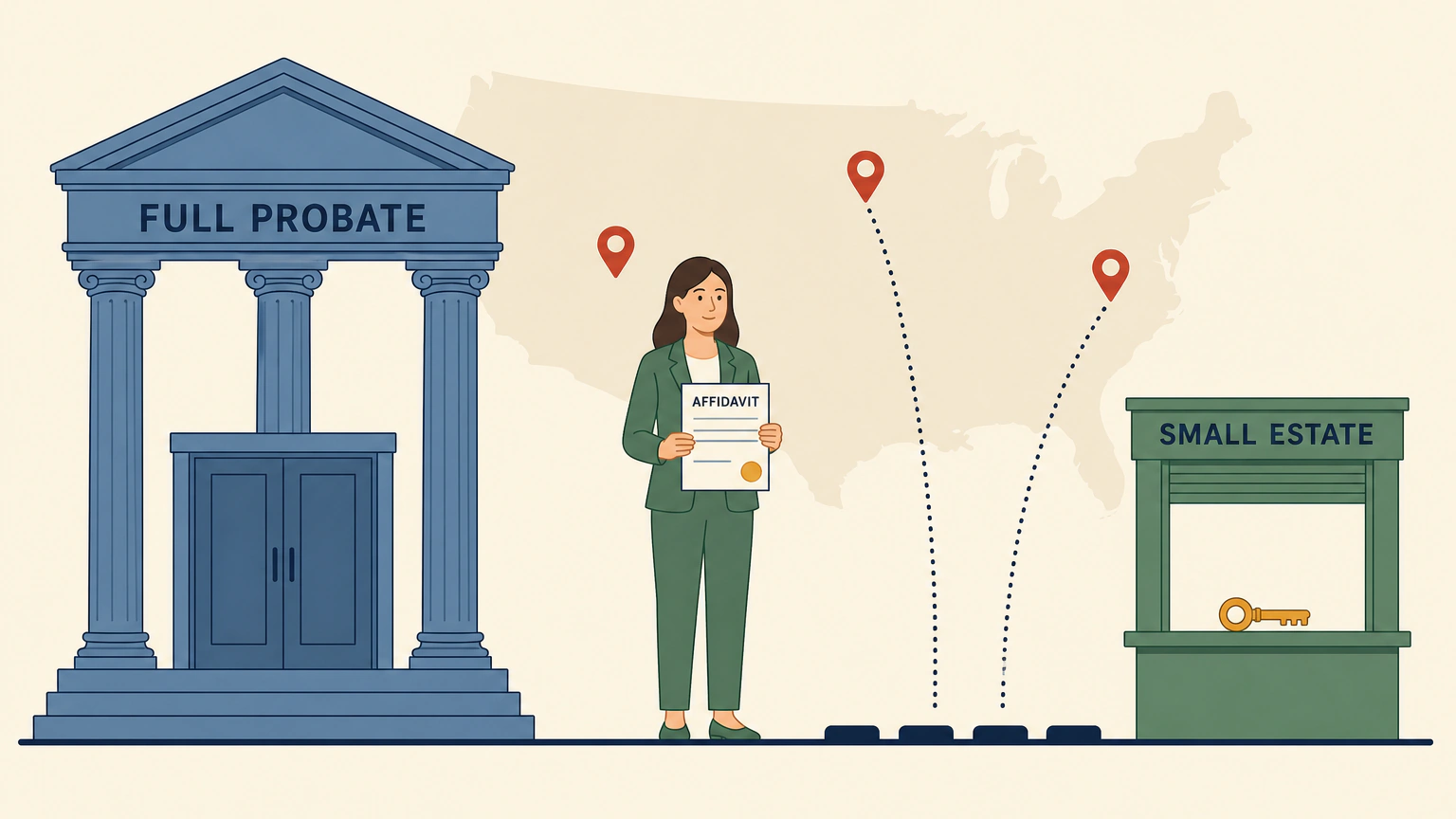
Identify whether assets need a small-estate procedure, court probate or trust administration. Then separate the lawyer’s work from executor or trustee compensation, taxes and estate expenses. Ask who pays before estate funds become available.
| Service or situation | Estimated cost or fee basis | Scope and conditions |
|---|---|---|
| Small-estate affidavit preparation | About $250–$800 in legal fees | Preparing the affidavit and related basic paperwork when the estate qualifies. This is not full court probate or a fee for resolving disputed ownership. |
| Routine uncontested court probate | About $3,500–$5,000 in legal fees | Ordinary administration within the agreed estate and court scope. Confirm opening, notices, inventory, creditor issues, distributions and closing; disputed matters require more work. |
| Lawyer’s trust-administration assistance | About $250–$500 per attorney hour | Advice and legal work for the trustee after a death. Ask who handles notices, asset transfers and accounting, and which tasks can be delegated. |
| Will, trust or inheritance dispute | Separate litigation budget | Compare hourly or phase-based terms for the actual dispute. If a recovery-based fee is offered, define the recovered money it applies to and responsibility for expenses. |
What changes the cost
- State procedure, asset ownership and estate complexity
- Cooperation, creditor issues, property and disputes
Other costs to budget for
- Court, bond, notice, appraisal and accounting expenses
- Executor/trustee compensation and estate tax work
Ask before hiring
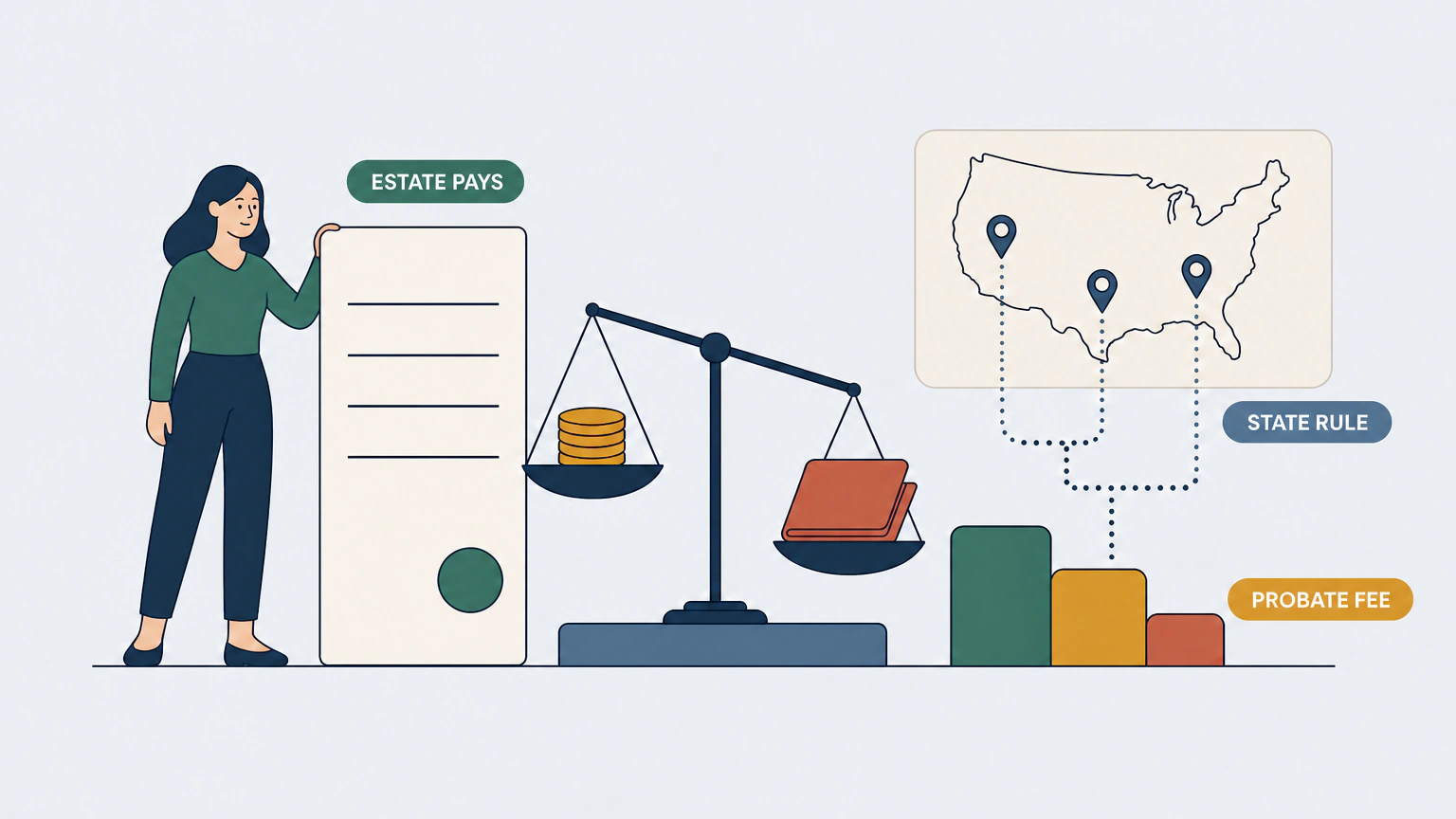
What work reaches closing, which expenses are separate, and who pays before estate assets can be accessed?
Ask whether local statutory fee rules affect the estimate and whether an initial payment is credited to later billing. Small-estate eligibility must be checked before relying on the limited-service price.
Frequently asked questions
What does an executor actually have to do?
Find and file the will, get authority from the court, secure the property, open an estate account, notify creditors and government agencies, value everything, pay valid debts and taxes, keep records, then distribute and account to the beneficiaries. You are personally responsible for doing it properly, which is why executors hire help even for small estates.
Does every estate have to go through probate?
No. Property held in a living trust, accounts with a named beneficiary, and assets owned jointly with rights of survivorship pass outside it. Many states also offer a simplified route for small estates. What is left in the deceased's sole name is what drives the court process, so an inventory is the first honest answer to this question.
How long does estate administration usually take?
Months, not weeks, and a year or more is common for anything with real estate, a business or a dispute. The creditor notice period, tax filings and the court calendar set the pace, and none of them hurry. A firm that quotes you a fast finish before seeing the assets is guessing.
How is probate work usually billed?
Hourly in most firms, flat fee for a straightforward filing, and in some states as a share of the estate set by statute or by agreement. Ask what the quote covers, what is charged separately, and whether the fee comes out of the estate rather than your own pocket. Get the answer in the engagement letter.
Can beneficiaries challenge a will or an executor?
Yes, and the two are different fights. A challenge to the will questions capacity, undue influence or how it was signed. A complaint about the executor is about conduct: delay, missing records, self-dealing. Courts take accounting seriously, so an executor who keeps clean records and communicates is rarely the one in trouble.